Welcome to China BuKe Printing Co.,Ltd, please choose:
ISO9001 quality/ISO14001 environmental management system certification/FSC
China BuKePrinting Manufacturer
 简体中文
简体中文 繁體中文
繁體中文 English
WhatsApp/Tell: +86 13632979900
Erison@book0755.com

Knowledge quantity is leading in our printing industry
-
8934
-
8431
-
5627
-
5157
-
4671
-
4572
-
4484
-
4227
-
4185
-
4171
-
4115
-
4073
-
4062
-
3999
-
3927
-
3919
-
3884
-
3814
-
3810
-
3552
-
3531
-
3402
-
3329
-
3302
-
3134
-
3090
-
3075
-
3060
-
2999
-
2907

Learn printing knowledge
Learning printing not only needs to learn professional knowledge in the industry, including the knowledge points of pre-press, printing and post-process of printing.
Learn printing industry knowledge, printing process knowledge, printing color knowledge And more knowledge of customer needs. Learn common problems encountered in printing and solve them.

Comprehensive knowledge about printing
Traditional printed materials and traditional printing techniques. A book, a picture album, or a cardboard box may have different qualities compared to the past, but they are still traditional printed materials with no difference. However, in the past, they could not escape the smelting of "lead and fire", but now they all come from fingertips and can be easily clicked on a computer. Therefore. Although printing is still a traditional form, the traditional craftsmanship used in production has long been replaced, and production efficiency has been greatly improved. So, behind the traditional printed materials that have not changed in appearance, there are a lot of technological innovations hidden, and many of them are completely transformed before and after printing.
1、 Understanding the Printing Industry:
1. What are our main printing methods currently?
(1) Offset printing (widely used in China with stable quality and craftsmanship, such as newspapers, books, packaging, PVC, and stickers)
(2) Gravure printing (for printed products such as cigarette labels, wine labels, instant noodle pockets, sugar paper, etc. with high printing quality requirements and large printing quantities)
(3) Screen printing (based on printing characteristics, a small quantity can be printed, just a few dozen sheets can be printed, and the shape of the printing plate can be changed. For example, it can print on curved surfaces with a wide range of substrates! The printing ink layer is thick, and the mesh size cannot be changed, so silk ink, ice flower ink, and UV can be used for special effects! )
(4) Flexographic printing (printing packaging products, with a relatively wide range of substrate materials! Especially for plastic products and corrugated cardboard boxes, it has unique advantages)
(5) Inkjet printing (formerly mainly used for anti-counterfeiting barcode printing, now it can also perform well on finer printed products, especially for the short version market. The biggest development is its use in digital proofing. In addition, the printing format can be almost infinitely large! Its application in the market has a relatively stable market.)
(6) Pad printing (the principle is like a stamp, and the shapes of the substrates that can be printed are also diverse, such as the printing of toothpaste strips, which has a faster printing speed compared to screen printing!)
(7) Digital printing (represented by HEIDELBERG's DI series, ROLAND's DICO Yu, and HPINDIGO); Some of Xerox's products, such as inkjet printing, are characterized by their short printing preparation time, which gives them a unique advantage in short form printing. The market trend is self-evident. In fact, there are many other printing methods that can produce special effects in printing due to their own characteristics, such as stone printing, which can have a good artistic effect on printing Chinese paintings on rice paper!

2. What are the common printed materials we use?
Classification of Printed Materials (by Ultimate Product Category):
(1) Office related printed materials such as letter paper, envelopes, and office forms.
(2) Promotional materials: Refers to a series of printed materials related to corporate or product promotion, such as VI manuals, posters, flyers, promotional samples, product manuals, calendars, wall calendars, invitations, hand-held paper bags, etc.
(3) Production category: refers to printed materials directly related to the production of products, such as packaging boxes and non drying adhesive labels, in large quantities.
3. What is the workflow of printed materials?
Printing process:
(1) Pre press refers to the pre printing work, generally including photography, design, production, typesetting, and film production;
(2) Printing refers to the process of producing finished products through a printing machine during the mid-term of printing;
(3) Post press refers to the post printing work, generally including cutting, laminating, die-cutting, bagging, mounting, etc., which is commonly used for promotional and packaging printed materials.
4. What are the main printing related equipment currently available?
(1) Pre press equipment: film typesetting machine, proofing machine, computer, inkjet printer, laser scanner, etc.
(2) Printing equipment: Roller printing machine: capable of printing newspapers, books, magazines, and picture books, with both domestic and imported options; According to the size of the printing format, it can be divided into fully open printing machines, paired machines, four machines, and eight machines; According to the number of printing colors, printing machines are divided into monochrome printing machines, two-color printing machines, four-color printing machines, etc. Printing equipment also includes equipment operated manually, mechanically, and automatically by computers.
(3) Post press equipment: page cutting machines, paper cutting machines, hot stamping machines, embossing machines, die-cutting machines, coding machines, laminating machines, binding machines and other post press processing equipment.
(4) Other printing equipment: professional adhesive printing machines, computer specific label printing machines, business card specific machines, high-speed printers, copiers, packaging, cardboard box printing machines, etc.
5. What are the mainstream printing equipment in the domestic printing industry?
Taking four-color printing machines as an example: Heidelberg (Germany), Gaobao (Germany), Komatsu (Japan), Manroland (Germany). Among them, German printing machine manufacturers have become global leaders in printing machines and related equipment with their cutting-edge product technology, comprehensive printing solutions, and high-quality services.
6. What is a four-color printing machine?
(1) What is four-color printing? The four-color printing process generally refers to the printing process that uses yellow, magenta, cyan primary color inks and black ink to reproduce various colors of the original color manuscript.
(2) What is spot color printing? Spot color printing refers to the use of yellow, magenta, and cyan. The printing process of reproducing the original color with ink other than black ink and four-color ink. Spot color printing technology is often used in packaging printing to print large-area base colors.
(3) What products must use four-color printing technology? Photos captured through color photography that reflect the rich and diverse changes in nature, artists' color artworks, or other images containing many different colors must be scanned and color separated by electronic extension machines or color table systems for technological requirements or economic considerations, and then replicated using four-color printing technology.

7. How much do you know about printing paper?
(1) The unit of paper:
A. Gram: The weight of one square meter of paper;
B. Order: 500 sheets of paper per unit (factory specifications);
C. Ton: As usual, 1 ton equals 1000 kilograms, used to calculate paper prices.
(2) Paper specifications and names
A. There are four most common sizes of paper:
① Regular paper: 1092mm in length and 787mm in width;
② Dadu paper: length 1194 millimeters, width 889 millimeters;
B. The most common name for paper:
a、 Typing paper (color printing paper): 28g Orthometric specification: used for spreadsheets and tables, with seven color options: white, yellow, blue, green, etc.
b、 Glossy paper: 1. 28-40g Zhengdu specification: One side is glossy, used for couplets, tables, and notes, and is a low-grade printing paper.
c、 Writing paper: available in sizes ranging from 55 to 100 degrees and with high accuracy, used for low-end printed materials, with domestic paper being the most commonly used.
d、 Double adhesive paper: 60-150g in both large and regular sizes, commonly used for mid-range printing in domestic, joint venture, and imported markets. (60g、70g、80g、100g、120g、150g)
e、 Newsprint: 55-60g roller paper, regular paper, and newspaper selection.
f、 Carbonless paper: 47-52g in both large and regular sizes, with direct copying function. It is divided into upper, middle, and lower papers, and the upper, middle, and lower papers cannot be exchanged or flipped. The paper prices are different, and there are seven colors available. It is commonly used for waybills and tables.
g、 Copperplate paper: Double copper 80-300g, both regular and large, suitable for high-end printed materials. (80g, 105g, 128g, 157g, 200g, 230g, 250g, 300g) Sub pink paper: 105-300g for elegant and high-end color printing. (105g、128g、157g、200g、230g、250g、300g)
i、 Gray background white board paper (white background white board paper, white background gray board paper): 250g or more, with white background gray on top, used for packaging.
j、 White cardboard: 230-300g double-sided white, used for mid-range packaging. (210g、230g、250g、300g、350g、)
k、 Kraft paper: 80-150g for packaging, cardboard boxes, file bags, archive bags (120g), envelopes (100g for regular envelopes). (60g, 80g, 100g, 120g, 150g with white kraft paper)
2、 Printing technology terminology:
1. Printing: The process of transferring graphic and textual information from an original manuscript to a substrate using a printing plate or other means.
2. Planograph: A printing method that uses photolithography for printing.
3. Offset lithography is an indirect printing method in which the text and images on the printing plate are first printed on the intermediate carrier (blanket cylinder), and then transferred onto the substrate.
4. Offset printing press: According to the principle of indirect printing. A flatbed printing machine that transfers images and text onto a substrate through a rubber blanket transfer cylinder for printing.
5. Printing plate: A printing graphic carrier used to transfer ink onto a substrate. It is divided into four categories: relief plate, intaglio plate, planographic plate, and perforated plate.
6. Plate making: The process of copying an original manuscript into a printed version.
7. Computerized phototypesetting system: a complete set of typesetting equipment consisting of character and typesetting instruction input device, correction device, proof output device, control device, and typesetting host.
8. Text composition: The process of assembling original text into a prescribed layout according to design requirements.
9. Printing down: The process of transferring information from a negative or positive film to a printing plate or other photosensitive material using contact exposure.
10. Pre coated photosensitive flat plate: A flat plate with a pre coated photosensitive layer that can be used for printing at any time, abbreviated as "PS plate".
11. Post press finishing: a production process that enables printed materials to achieve the required shape and performance, such as binding.
12. Indirect printing: The printing method in which the ink on the graphic and textual parts of the printing plate is transferred to the surface of the substrate through an intermediate carrier.
13. Printing stock: Various substances that can accept ink or adsorb pigments and present graphics and text.
14. Multi color printing: In a printing process, two or more ink colors are printed on a substrate.
15. Format: Cut a fully open sheet of paper into several equally sized small sheets, called the number of open sheets; Binding cost refers to the number of pages.
16. Rule guide: Paper positioning component of single sheet offset printing machine.
17. Gripper edge: The blank edge left at the front of the substrate such as the printing plate and paper during single sheet printing.
18. Overprint registration: When printing with two or more colors, each color separated image and text can achieve and maintain accurate alignment.
19. Register mark: a cross line and corner line set at the edge of the printing plate, which serves as the basis for proofreading and checking registration.
20. Overprint (double eyelid) out of register: The error of overlapping imprints during color printing.
21. Color patch: a standard for representing basic colors and their mixed colors using solid and/or mesh color blocks; During plate making and printing, it can also be used as a marker for separating color plates.
22. Four color offset printing: A type of offset printing that uses yellow, magenta, cyan, and black color separation plates and ink overlay to obtain a color that is basically the same as the original.
23. Chromatographic color atlas: The sum of color blocks of various colors printed by overlapping different dot percentages with standard cyan, magenta, yellow, and black inks.
24. Printed matter: a general term for various products produced using printing technology.
25. Horseback binding: A method of binding books, which involves actions such as stepping onto a horse's back. After wrapping the thin book, place it on the iron frame and thread it through the iron nail. (Generally above 32P, do not use riding nails)
26. P-number: refers to one side of a 16 page paper. (It can also refer to other open numbers)
27. Film: It is a transparent film used for transferring electronic files of printed materials through a typesetting machine, and is used for printing and typesetting.
28. Grams: an important indicator for measuring the thickness of paper.
29. Proofreading: The process of making a printed sample.
30. Film output: The process of outputting film using electronic files.
31. Offset printing: Offset printing, where the printing plate used is smooth.
32. Offset paper: A type of printed paper with no coating layer on the surface, commonly used for letterhead, envelopes, etc.
33. Art paper: A type of printed paper with a coating layer on the surface and a glossy finish, commonly used for printing color promotional materials.
34. Matte copper: a type of printing paper, also known as matte powder, with a matte treated surface coating layer, commonly used for printing color promotional materials.

3、 List of Paper Sizes
There are usually three types of open formats based on their size: large format, medium format, and small format.
For paper with a size of 787-1092, 12 or more open pages are considered large open pages, 16-36 open pages are considered medium open pages, and 40 or less open pages are considered small open pages. However, books with text as the main focus are generally medium open pages.
Except for 6 open, 12 open, 20 open, 24 open, 40 open, and approximately square shapes, all other book formats are rectangles with varying proportions, suitable for different types of books with different properties and purposes.
Printed product size
Number of openings (large) Size unit (mm)
2 open 840 * 570
4 open 420 * 570
8-open 420 * 285
16 open 210 * 285
32 open 210 * 140
Open (positive) size unit (mm)
2 open 520 * 740
4 open 370 * 520
8-open 370 * 260
16 open 185 * 260
32 open 185 * 130
Please add the unit (mm)
A4 210*297 A3 297*420
B5 182*257 B4 257*364
16K 193*270 8K 270*386
4、 Common Printing Paper and Process Selection
1. Cover: 250g-300g sub powder paper or copperplate paper, coated with gloss film or sub film, with die-cutting process. Interfold: 128-200g matte paper or copperplate paper.
2. Albums and catalogs: outer pages ranging from 200g to 250g, inner pages ranging from 128g to 200g, made of sub powder paper or copperplate paper (cover or back cover), with a glossy film or sub film on the cover or back cover.
3. Posters and posters: single-sided printing on 157g-200g matte paper or copperplate paper.
4. Hanging flag: double-sided printing on 200g-300g sub powder paper or copperplate paper, with glossy film or sub film, can be die cut.
5. Promotion brochure: 128g-200g sub powder paper or copperplate paper.
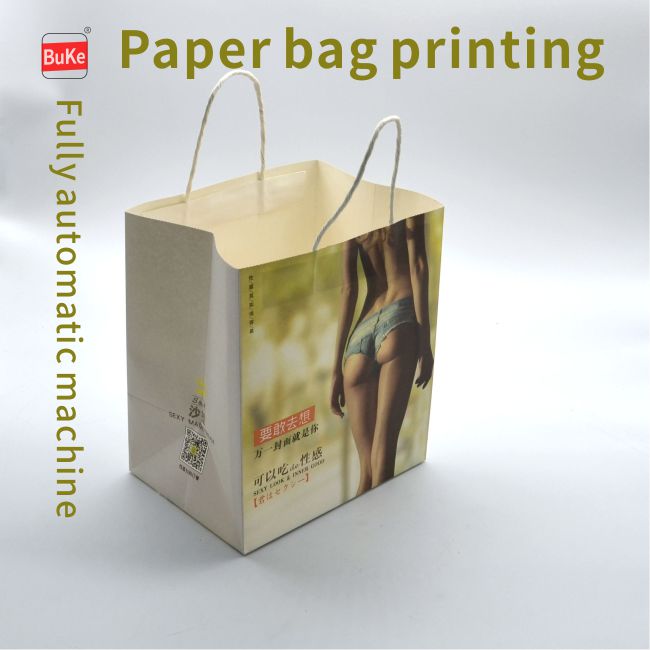
6. Handbag: 200g-300g sub pink paper, copperplate paper or white cardboard, covered with outer film.
7. Tables, letterhead paper, and notes: 70g-100g double adhesive paper, often printed in spot colors.
8. Envelopes and file bags: 100g to 150g double adhesive paper or kraft paper, often printed in spot colors.
Comprehensive knowledge about printing


Contact us
Free sample
E-mail:
Erison@book0755.com
Jiatong@book0755.com
WhatsApp/Tel:
+86 13632979900
Wechat:


-
What are the materials used for laminati......
2026-03-13
-
Who are closely related to book publishi......
2026-03-01
-
The printing factory tells you about the......
2026-03-01
-
The meaning of substitution in graphic d......
2026-02-28
-
The printing factory tells you the pre p......
2026-02-27
-
Research on the Form of Traditional Book......
2026-02-26
-
Monochrome printing, color printing, and......
2026-02-27
-
The huge market prospect of manual print......
2026-02-27
-
What is ring lining for printed hardcove......
2026-02-26
-
What are the characteristics of amplitud......
2026-02-25
-
The basic elements of book printing cove......
2026-02-24
-
Selection of Cover Materials for Book Pr......
2026-02-24
-
What does a customized book box manufact......
2026-03-22
-
Characteristics of 3D printing in packag......
2026-03-08
-
Selection of anti-counterfeiting packagi......
2026-03-01
-
The orientation of packaging box type pa......
2026-02-28
-
Recognition method of two-dimensional ba......
2026-02-26
-
Repetitive anti-counterfeiting packaging......
2026-02-26
-
What are the materials used for laminati......
2026-03-13
-
Who are closely related to book publishi......
2026-03-01
-
The printing factory tells you about the......
2026-03-01
-
The meaning of substitution in graphic d......
2026-02-28
-
The printing factory tells you the pre p......
2026-02-27
-
Research on the Form of Traditional Book......
2026-02-26


China Printing Factory/Printing Company/Printing Album/Packaging Box Printing/Packaging Box Customization/Handbag Printing/Textbook Printing/Color Box Printing/Printing Factory Shenzhen/Packaging Printing Factory/Paper Box Printing Album/www.book0755.com/No.91 Industrial Avenue Pinhu Street Longgang Shenzhen Guangdong China / 518111
China Guangdong Shenglongda Printing/Hualiantai Paper Packaging/China Buke Printing Co., Ltd/Shenzhen Buke Trading Co.,Ltd Sitemap 繁体 简体
公安網備:粵ICP備2022046155號-1
High quality production
Advanced equipment
Delivery to
your door
After-sale guarantee
Heidelberg , and
other imported equipment



ISO9001/ISO14001
FSC forest certification
Global door-to-door
for you
Free reprint for you
if quality problems
E-mail: Erison@book0755.com
Jiatong@book0755.com
Sales1: +0086-136-3297-5453
Sales2: +0086-136-3297-9900
WhatsApp: +86-13632979900
HongKong Tell: 085298817727